fbpx

Personal Injury

What-to-Do-if-You-Have-Been-Injured-by-a-Defective-Product

What to Do if You Have Been Injured by a Defective Product

According to the U.S. Consumer Product Safety Commission (CPSC), defective products injure millions of Americans every year, and kill thousands of others. We use dozens of different consumer products each day. Nearly any product we encounter could be dangerous if it is defective. Defective products can range from children’s toys, to medical devices, to automobiles, and much more. If you or a family member has been injured due to a defective product, it is important to know that you may be able to recover your lost income, medical expenses and other damages. Governmental agencies such as the Consumer Product Safety Commission (CPSC), the Food and Drug Administration (FDA) and the National Highway Traffic Safety Administration (NHTSA), work to monitor consumer products and ensure they are safe. Thousands of products are recalled every year when a product defect is suspected. What is Product Liability? Product liability refers to holding a manufacturer or seller liable for placing a defective product in the hands of a consumer. The liability for this can lie with the manufacturer or a seller that is involved in the chain of distribution. This includes: The manufacturer of the product. The manufacturer of the component parts. The wholesaler. The retailer. The law requires that products not be unreasonably and unexpectedly dangerous to the consumer. When someone is injured by a defective product, liability is usually based on the legal theories of negligence, strict liability or breach of warranty. Types of Defective Products Just about any consumer product can be considered dangerous if it is faulty. Products that are commonly involved in a defective product claim include: Defective medical products. Dangerous medications. Tainted food or beverages. Defective motor vehicles or component parts. Faulty home appliances or furnishings. Unsafe toys or children’s products. Toxic cleaning agents, gardening supplies. How is a Product Defective? In order to make a defective product claim, we will need to prove that the product was defective due to: A manufacturing defect: This would include production flaws or product contamination for example. A design defect: The design of the product may make it inherently dangerous. Failure to warn: This means there was inadequate warning about the product’s risks, inaccurate instructions, or misleading marketing. How Do You Prove a Defective Product Claim? In order to prove a product liability claim, key elements must be present which include: The product was used for the purpose it was intended; The use of the product caused injury or monetary loss; The product was defective because of a failure to warn, design or manufacturing defect; and The product defect directly contributed the victim’s injury. If you or a loved one has been injured by a defective product, it is important to take prompt action to ensure that your rights are protected. It is important that you keep the product that has caused the injury, if possible. This would include any packaging, and documentation associated with the product such as receipts, extended warranties and maintenance documentation. Please contact our office. We are here to help. The sooner we get involved the better. We can ensure that important evidence is preserved, and your rights are protected.


Read More »
The-Dangers-of-Drowsy-Driving-in-the-Trucking-Industry

The Dangers of Drowsy Driving in the Trucking Industry

Driving and fatigue are a dangerous combination. But when it comes to drivers of big rigs, the problem is even more serious. Commercial trucks weigh up to 80,000 pounds. Because of their sheer size and weight, they are difficult to control. Stopping a truck or making a sudden maneuver requires more time and distance than with a passenger vehicle. A fatigued driver operating a truck spells increased danger to all drivers on the road. Drowsy driving is responsible for up to 100,000 vehicle wrecks annually. In terms of big rig wrecks, the National Transportation Safety Board reports that 30-40% of all commercial wrecks are caused by driver fatigue. When there is a fatality collision between a big rig and passenger vehicle, 98% of the time the fatality will occur in the passenger vehicle. To combat the issue of driver fatigue, the Federal Motor Carrier Safety Administration (FMCSA) created Hours in Service rules. These rules apply to all commercial vehicles that meet certain weight and carriage specifications. Just a few of these new rules include: All drivers are required to have 30-minute rest breaks for every 8 hours of driving. Drivers are allowed an 14-hour work day, with a daily limit of 11 hours behind the wheel. The maximum average work week for a truck driver is now 70 hours, instead of 82. Truck drivers are under pressure to meet pick-up and delivery deadlines and stay on schedule. They often work very long hours on monotonous roadways. To make matters worse, unscrupulous trucking companies may even encourage this behavior, and turn a blind eye to incorrect driving logs. In an effort to meet tight deadlines, some truck drivers will use over the counter stimulants and prescription drugs, as well as illegal drugs to stay awake. This of course, only makes matters worse. Rather than relieving fatigue, stimulants will often make matters worse. Driver fatigue of course, isn’t the only cause of truck wrecks. These events can also caused by bad weather, traffic problems, unsafe roads and mechanical failures. Federal regulations attempt to address these issues. These regulations involve enforcing proper truck maintenance, safe vehicle operation, drug and alcohol testing, route testing and much more. Truck drivers and the companies that employ them are always required to comply with state and federal regulations. The Institute of Highway Safety has found however, that long distance truck drivers often break these rules. In one study, 33% of truck drivers interviewed admitted to routinely violating these rules. Driving in an exhausted state could be negligent. Drowsy driving causes truck wrecks and presents a danger to anyone on the road. If you or a loved one has been injured in a trucking wreck, it is important to come speak with us. If the wreck was caused by the negligence of another, you could be entitled to compensation for your injuries including lost wages, reimbursement of medical costs and pain and suffering.

Read More »
Winter-Holidays-Bring-Increased-Driving-Danger

Winter Holidays Bring Increased Driving Danger

The winter holidays are right around the corner! From Thanksgiving through New Year’s, we all look forward to enjoying the holiday hustle and bustle, spending more time with friends and family and attending holiday parties. Amidst all these festivities, however, there is a dark side. During the holidays there is a marked increase in alcohol-related car wrecks. The statistics speak for themselves. Drunk driving is responsible for 40% of car collision deaths over the holiday season. According to the National Highway Traffic Safety Administration (NHTSA) on average, there are 36 fatalities per day from alcohol-related car wrecks. During the three-day Christmas holiday, however, there is an average of 45 per day and 54 per day over the New Year’s holiday. Experts contend that this spike in wrecks is due to several factors. During the holidays, there is both an increase in holiday travel and an increase in the consumption of alcohol. It is estimated that during Thanksgiving there are an estimated 43.5 million people on the road, and between Christmas and New Year’s Day, there are 103 million people on the road. Let’s face it, it is a festive time of year. People are traveling to see their families and friends and attending parties and other holiday events. Interestingly, 51% of drunk drivers said that they drank more during the holiday season than they did the rest of the year. So, the potential danger is there. Here are a few tips to keep you and your family safe during the holidays: Plan Ahead Being mindful of the potential danger of drinking and driving is half the battle. It is important to put a plan in place ahead of time, so you don’t catch yourself on the road having had one too many. Choose a Designated Driver This is not a new idea, but it is an effective one. If alcohol will be served at an event, make an agreement ahead of time to act as the designated driver and not drink or find someone else who will do so. In the alternative, bring extra money for a cab, or be sure you have your Uber account ready to use. Hosting a Party If you are hosting a party, it is important that you are sensitive to this issue. Be sure to serve plenty of food and offer non-alcoholic alternatives. Take your guests keys at the door or arrange for their transportation home. Don’t Add to the Problem on the Road There are other strategies that you can use to stay safe during holiday driving. It can be a good idea to leave a party early and avoid being out on the road late at night. Drunk driving accidents tend to happen later in the evening, where people have been drinking for many hours. Keep a Safe Distance If you are driving and notice a car driving erratically, slowing down and speeding up, or swerving in between lanes, assume they may have been drinking. Put a safe distance between you and the other car and call 911 to report them. Prepare to give the operator your location and if possible the other car’s driver’s license number. Holidays are a fun and festive time. Keep these tips in mind to keep you and your family safe. If a wreck should occur, call us as soon as possible. We are here to help.

Read More »
Concussion

Are Concussions Considered a Traumatic Brain Injury?

These days, there seems to be confusion surrounding the terms “concussion” and “traumatic brain injury.” Often, we hear about concussions that occur because of a car wreck, slip and fall or sports-related injury. A concussion is the most common type of traumatic brain injury. What’s the Difference? Concussions are quite common. It is reported that there are 3.8 million concussions occur in the U.S. annually. Even though concussions are a type of TBI, not all TBIs are concussions. The term TBI is used to describe the mechanics of an injury. Trauma indicates there has been in an injury to the brain by an outside source. A TBI can be characterized as mild, moderate or severe. A concussion is considered a mild TBI. But, when it comes to traumatic brain injuries the term “mild” can be misleading. A mild TBI can cause permanent, life-altering changes to the brain. This is why proper diagnosis and treatment is essential. Proper treatment may be the difference between having an injury that resolves after a few weeks or months, or one that is permanent. Concussions are challenging to diagnose. The most common way a concussion occurs is when the victim experiences a blow to the head or rapid acceleration or deceleration of the head (for ex. shaken baby syndrome or an auto collision). The head trauma may or may not be followed by a brief loss of consciousness. There are countless ways in which these injuries can arise. This is why it is so important to have a physician evaluate your symptoms. Common symptoms can include: Any loss of consciousness; Confusion; Changes in vision; Changes in time perception; Memory loss; Nausea and/or vomiting; Drowsiness; Headache; Difficulty sleeping; Mood or behavior changes. If you have been injured, it is important to be checked out by a physician. Keep in mind that a concussion can occur in ways you wouldn’t otherwise expect, for example, in the case of whiplash. While a whiplash victim may not have necessarily received a blow to the head, a concussion could still be possible from the rapid acceleration and deceleration of the head. It is also important to note that even when you are checked out by a doctor, a concussion can be difficult to diagnose. You may have a concussion even though you didn’t lose consciousness. Or the concussion may not be readily apparent from a CT scan. It is important however to go through these steps to ensure that you receive the appropriate treatment. If the injury is a concussion, in many cases, the injury will heal within a few months to a few years. It is important to note however, that in some cases, a concussion can cause long- lasting  or even permanent problems. If you have been in a wreck and have suffered a head injury, get medical attention right away. Then, call us for guidance. If your injury was caused by the negligence of another party we may be able to help you obtain reimbursement for your medical costs, harms, losses, and lost wages.

Read More »
A-Change-of-Weather-Poses-Increased-Driving-Risks

A Change of Weather Poses Increased Driving Risks

The kids are back in school, and summer is behind us. There may be a little chill in the air, and people are getting ready for apple cider, sweaters, pumpkin pie and all the fun that this time of year brings. It is important to keep in mind that as the weather changes, so do our driving risks. The truth is, a change in weather directly affects driving safety. This is particularly true between Fall and early Spring. Statistics report that in the U.S., there are approximately 5,748,000 car accidents per year. Out of these 1,259,000 are caused by weather conditions. Any type of adverse weather condition can affect your normal driving. Conditions such as rain, fog, ice and snow can limit visibility as well as change the way your car will react. Experts say that the common denominator in these accidents is that people drive too fast for the current road conditions they are experiencing. Some drivers don’t realize that the posted speed limit is only for optimal driving conditions. If the roads are wet or there is ice on the road, it is important to drive defensively and to reduce your speed accordingly. The law requires you to drive at a speed that is safe for the current driving conditions. Being armed with this knowledge is important. Here are some additional safety tips to keep you and your family safe: Never warm up your vehicle in an enclosed space. Make sure your tires are in good condition and properly inflated. Don’t use cruise control when driving on wet or slippery roads. Before heading out, check current weather reports. Always drive with at least a half tank of gas. Be mindful of driving through fallen leaves, which can be as slippery as ice. Slow down over shady spots because black ice may be present. Watch for animals on the road. Some animals (such as deer), become more active in the fall. If you are driving in foggy conditions, use your low beam lights. High beams will reduce your vision. The first 10 minutes of rainfall is the most dangerous, due to accumulated oil on the road. Reduce your speed accordingly. Be aware that your stopping time will be longer on wet or slippery roads. Allow more time to come to a complete stop. With the change of seasons, it’s always a good idea to get your car checked out thoroughly. Check your window wiper blades, brakes and tires. Make sure your headlights and signal lights are in proper working order as well. Have an emergency kit ready should you get stranded on the side of the road. Should you suffer an accident due the negligence of another, please come and speak to us. Know that if your accident was caused by negligence, you have a right to be compensated for your medical expenses, lost wages and pain and suffering. It is important to not delay. The earlier we speak to you the earlier we can begin gathering evidence and creating an action plan for you.

Read More »
Winter-Driving-Hazards

It’s Time to Prepare for Winter Driving Hazards

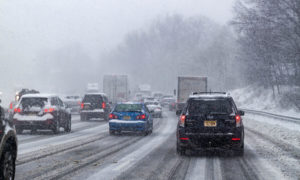
We are well into the fall season and while it may seem a bit early, it’s a great time to prepare yourself and your family for winter driving hazards. This is particularly true if you have a young driver in your family, or a new driver who’s never driven in winter weather. Take a few minutes to review these hazards with your family and discuss a plan to remain safe on the roads this winter. 1. Loss of traction in snow. If there’s snow on the roads, your vehicle will have less traction between the tires and the road surface. This is important to keep in mind while on the road but also while in your own driveway. Even pulling out of the driveway or parking space can be dangerous and lead to a crash if you don’t take extra precautions to compensate for the lack of traction. One way to compensate for this is to move your car back and forth a few times before parking. When attempting to move your vehicle again, clear a few feet of snow in front and behind. Packing down the snow under the vehicle and clearing the snow, can make it easier to gain the initial traction necessary to get your vehicle moving. Remind your loved ones to also keep a light foot on the accelerator to gain traction. Spinning the wheels is not always a good idea because it can cause the tires to create a rut that fills with ice and slush. You’ll also want to leave extra time and space for braking on slippery surfaces since tire traction is an important factor in being able to bring your vehicle to a stop. Many drivers operate four-wheel drive or all-wheel drive vehicles because they seem more sure-footed in the snow. It’s important to remember that these cars can create an illusion of safety. They are just as difficult to stop on a slippery road as a two-wheel drive vehicle. 2. Slides and Spins. Realizing that your vehicle is sliding or going into a spin is a scary feeling. Again, this is due to a loss of traction between your tires and the road surface. The best way to prevent a slide or spin is to slow down. However, if you find yourself in a spin or slide, there are three important things to remember – Take your foot off the accelerator; Don’t slam on the brakes; Gently steer into the direction you want the vehicle to go. Taking your foot off of the gas pedal helps stop the drive wheels from spinning and losing traction. Do not slam on your brakes because allowing the tires to turn freely will help regain traction. The current advice from AAA and others is that you should gently turn the steering wheel into the direction you want the vehicle to go. As you regain control of the vehicle, you can begin gently applying the brakes. Remember – don’t panic and don’t over correct. 3. Reduced visibility. Along with winter weather comes reduced visibility. When the visibility is poor you should allow yourself extra time and space to react to the road conditions and to other drivers. And remember, if the driving conditions make it more difficult for you to see, this also means it’s more difficult for other people to see you. Keep these things in mind and allow yourself more time to react. 4. Jackknifing. If you’ve ever seen a tractor trailer jackknifing, you know how dangerous it can be. It’s dangerous for the truck drivers, but also for the drivers around them. Jackknifing occurs when the truck driver applies the brakes and the trailer continues move in the direction of travel, but at an angle. This includes situations in which the trailer swings out into another lane or swings around at more severe angles. Keep in mind that poor weather conditions mean reduced visibility, poor traction, and delayed reaction times for all drivers and vehicle types. However, a tractor trailer can begin jackknifing in as few as 1.5 seconds – meaning, you need to be able to react very quickly to avoid being hit by the trailer, tractor, or both. Therefore, use caution and leave plenty of room when driving near tractor trailers to avoid becoming a victim of a jackknifing incident. Now that we’ve reviewed some of the major dangers of driving in winter weather, keep these tips handy to encourage safe winter driving. Apply just enough accelerator to get your vehicle moving. Slow down and maintain control of your speed. You may need to drive under the speed limit to remain safe in certain conditions. Avoid sudden turns to prevent slides and spins. Brake gently to avoid skids. Signal stops and changes in direction well in advance to give other drivers plenty of time to react. Don’t tailgate. We hope these tips help keep your family safe during winter driving. If you do face an injury from a vehicle crash, give us a call for a consultation. We’ll walk you through your options.

Read More »